🎵 Audioguía
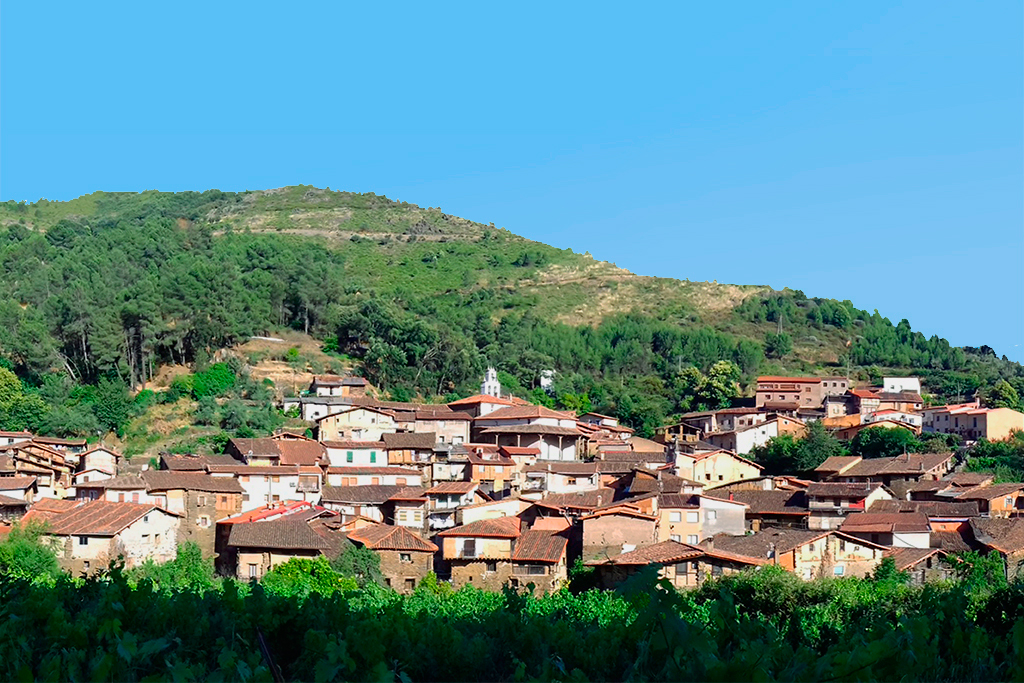
Robledillo de Gata, ubicado en un angosto valle enmarcado por altas montañas, parece dudar entre acompañar al río Árrago (que nace en su término y marcó su denominación en el pasado como Robledillo de Valdarrago) o escalar la ladera a oriente, dejando para la agricultura las tierras de poniente.
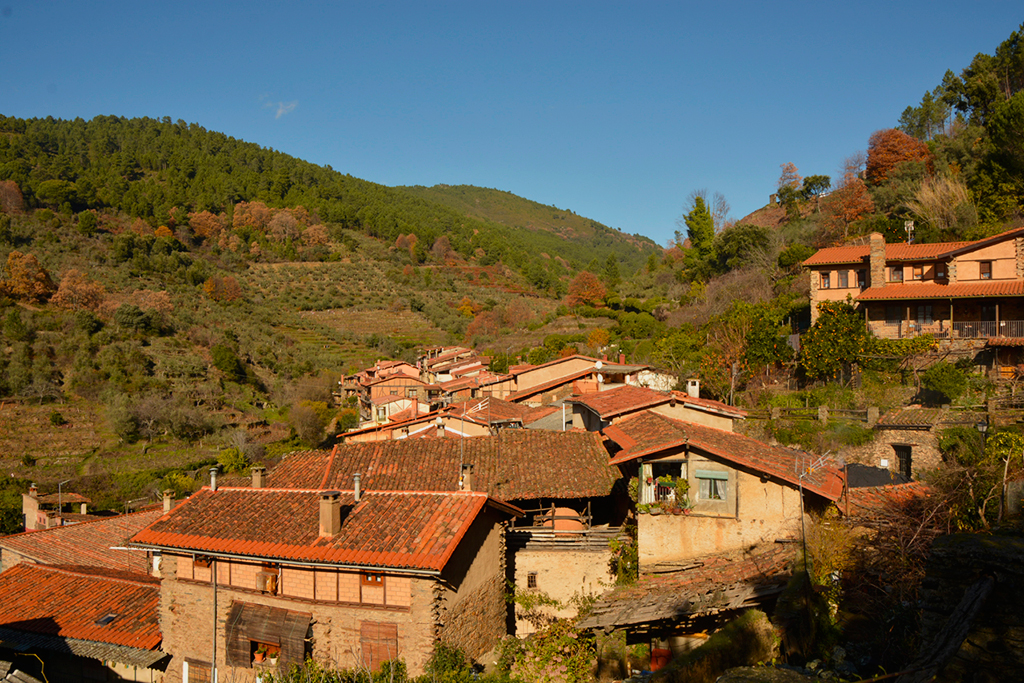
Declarado Bien de Interés Cultural con la categoría de Conjunto Histórico en 1994, Maravilla Rural en 2018 y Pueblo más Bonito de España, le convierte en el mejor representante de la arquitectura de montaña en Sierra de Gata.
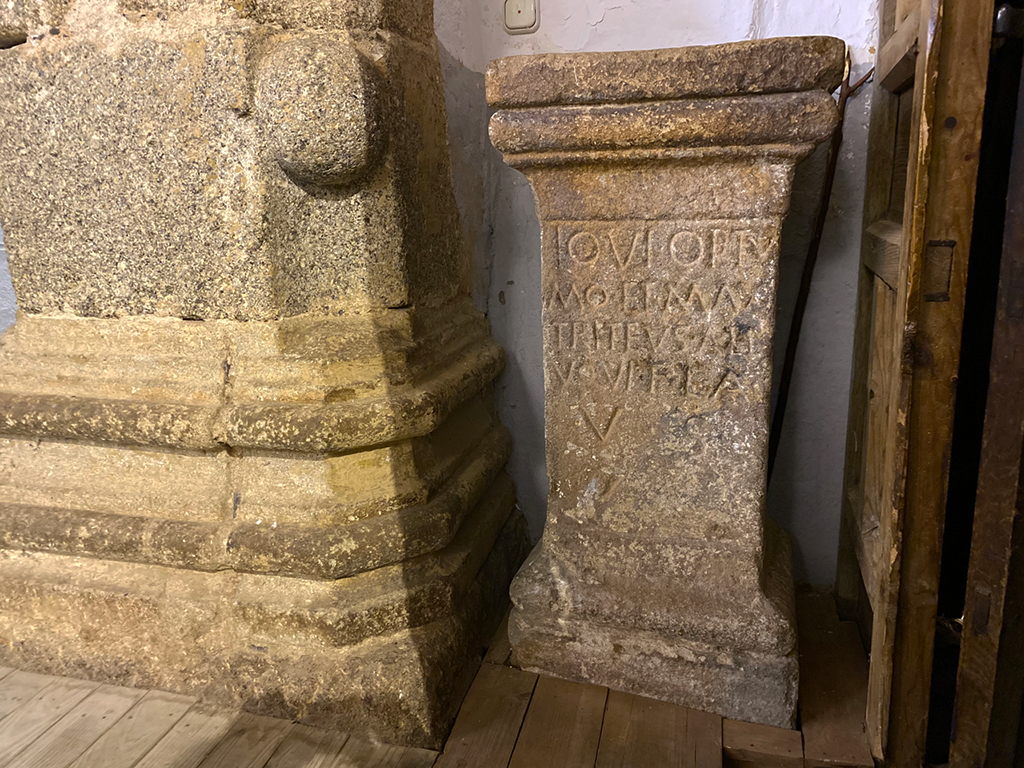
Las primeras muestras de pobladores datan del Bronce Medio y de la Cultura Romana se conserva un “Ara Votiva” en la Iglesia. Su Historia escrita comienza a partir del 1212 cuando Alfonso IX se asegura el dominio definitivo de la Sierra de Gata.
Robledillo se entrega a manos de los Señores de Monroy hasta que, en 1544, pasa a la Casa de Oropesa cuyo escudo se encuentra en el artesonado de la Sacristía. No es hasta 1833 cuando comienza a depender de la provincia de Cáceres y hay que esperar a 1958 para que abandone la Diócesis de Ciudad Rodrigo y pertenezca a la de Coria.
La traza urbana se desarrolla condicionada por la ladera y los pequeños arroyos que lo cruzan. Hay tres elementos que marcan su desarrollo: la plaza, donde se sitúa el Ayuntamiento, la iglesia, que por su ubicación domina el municipio, y el río, que marca la dirección de sus vías principales.
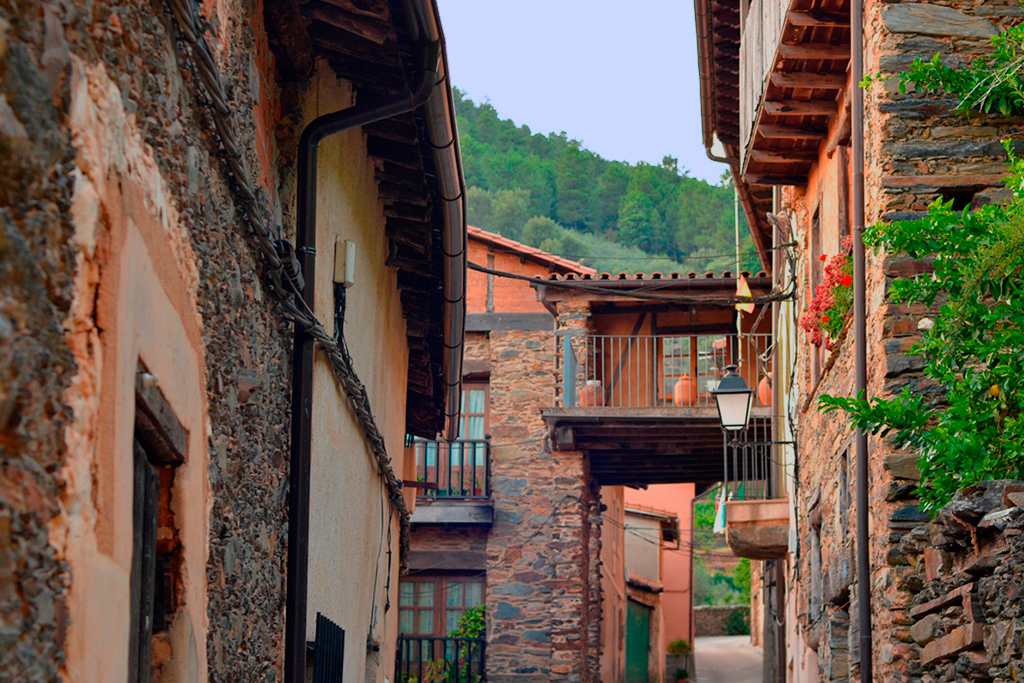
Robledillo es tierra en un mar de verdes abundando el tono pardo de su pizarra y la madera antigua, los ocres del adobe y del barro y el rojo de sus tejados, imagen que se rompe con el característico encalado de sus ventanas o los ricos esgrafiados. Bellos ejemplos de pasadizos sobre las calles continúan aportando frescura y protección a los preciados caldos que hacen famosa a esta villa.
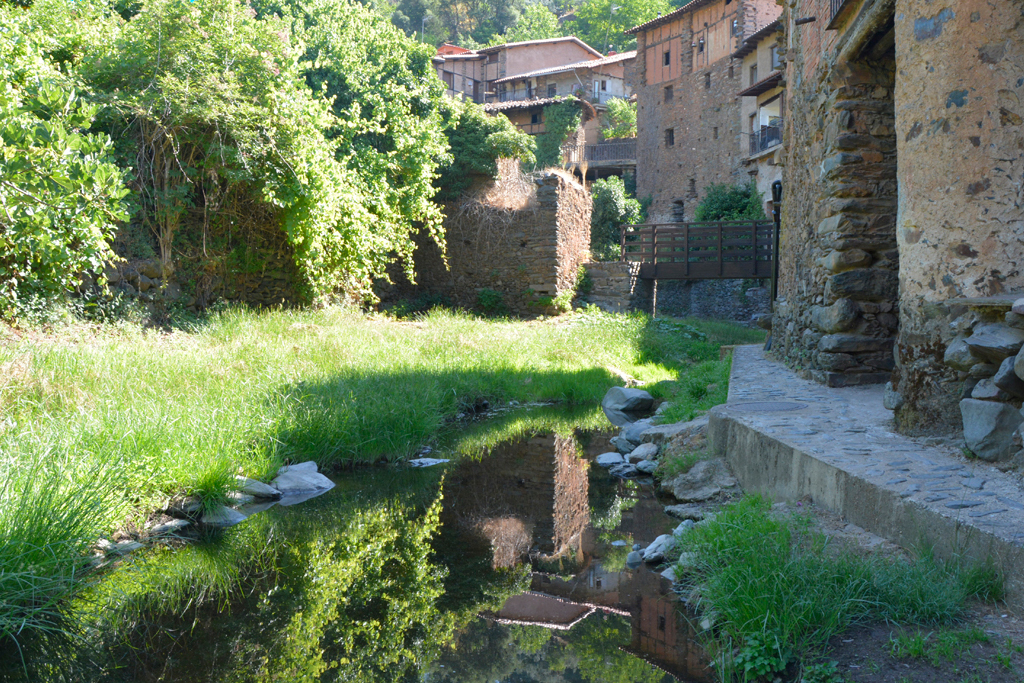
El entorno es una mezcla armoniosa, un paisaje verde atravesado por multitud de callejas, caminos y veredas que nos llevan a preciosos miradores. Bancales de huertas, olivos y vides en las partes bajas, el bosque de ribera abrazando el río y, a medida que se asciende, bosques de robles, castaños y pinos, siendo este último el rey de las fuertes pendientes entremezclado con zonas de monte bajo.
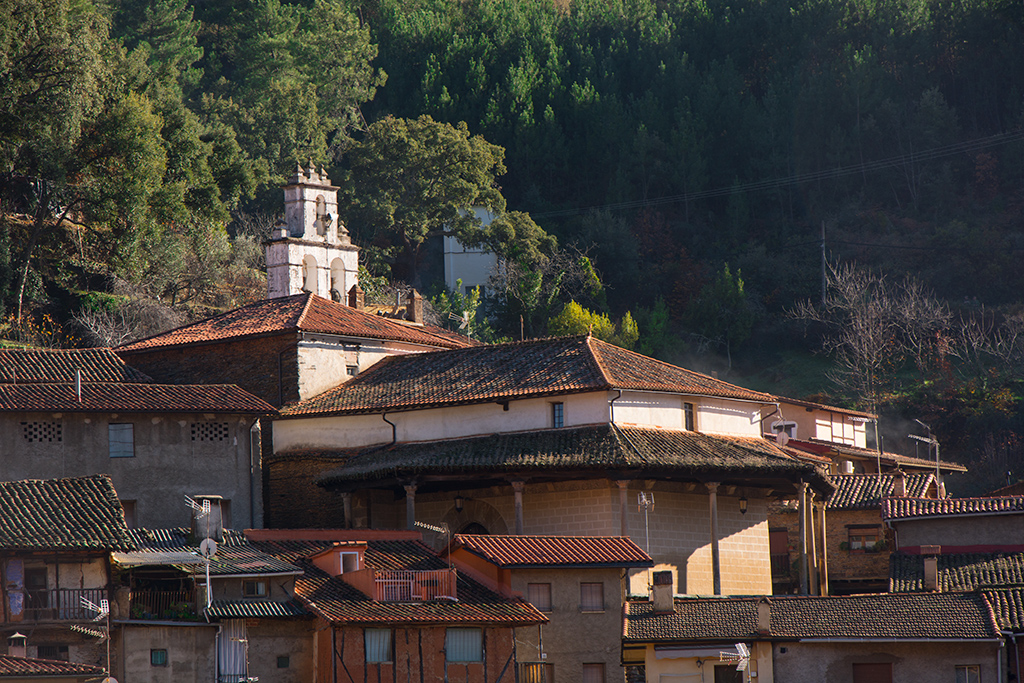
Cuenta Robledillo con elementos de Interés como la Iglesia de nuestra Señora de la Asunción del XVI, las ermitas del Manso Cordero, del Humilladero y la de San Miguel (todas ellas del siglo XVI), el antiguo Hospital Franciscano, los ejemplos de arquitectura vernácula, su entorno y el río Árrago con su Piscina Natural.
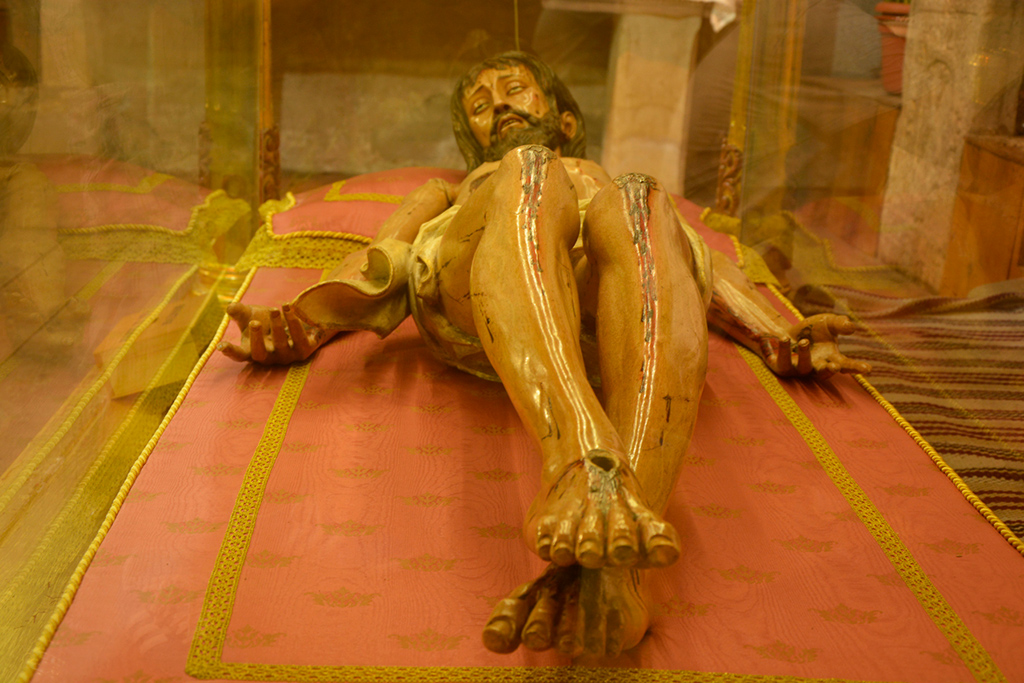
Merece especial mención la celebración de la Semana Santa, marcada por la devoción al Cristo yacente que se custodia en la iglesia, una preciosa talla articulada que recorre el caserío del bello pueblo a hombros de l@s vecin@s.