🎵 Audio guide
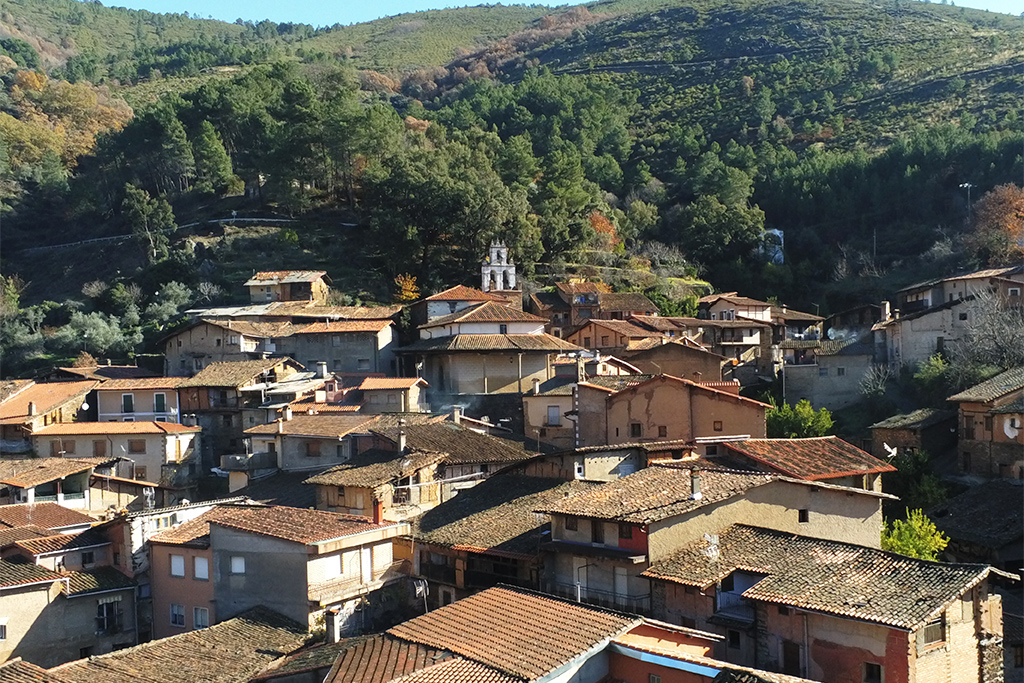
The Church of Our Lady of the Assumption was built on the site of an existing church dating from the 13th century. It was constructed between the 15th century and the end of the 16th century in various styles.
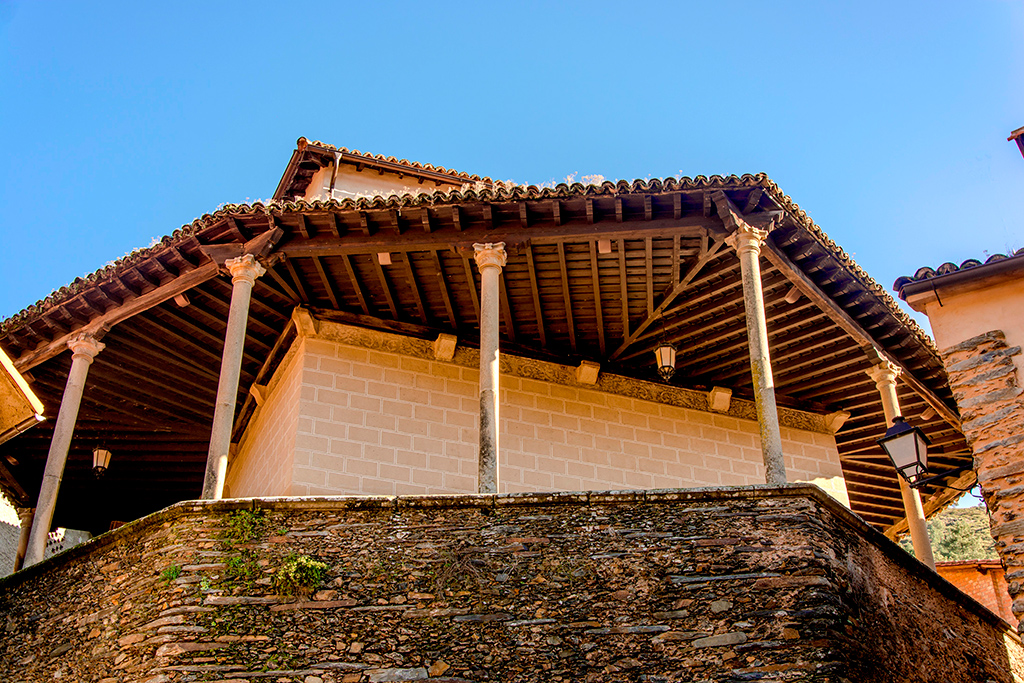
On the outside there is a porticoed atrium with a wooden roof supported by ten stone columns around the outside, and corbels on the nave walls.
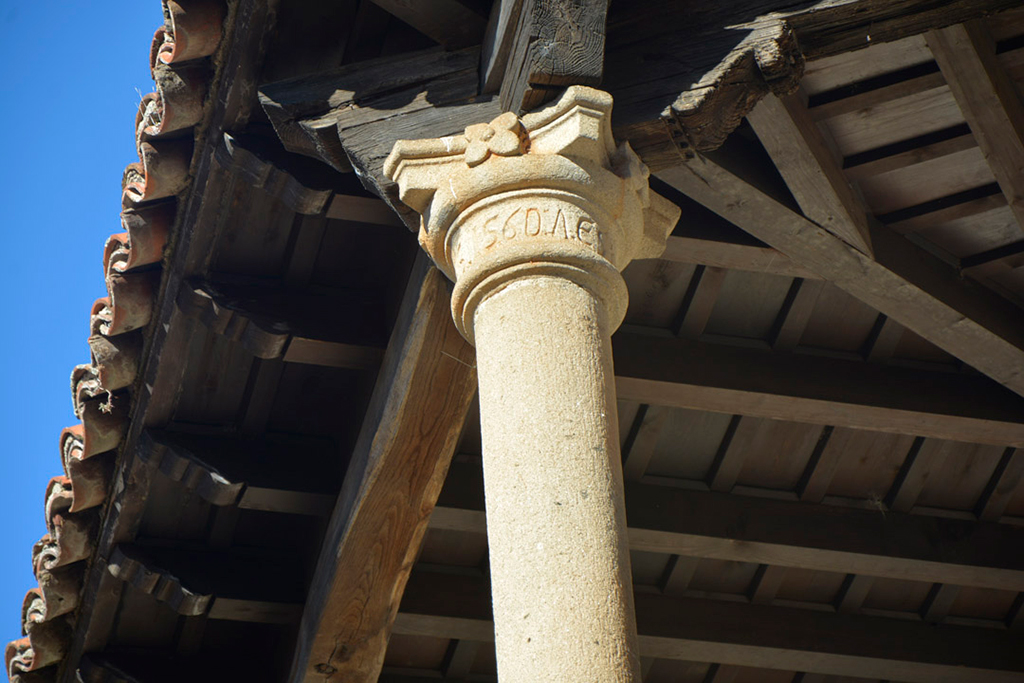
The columns all have similar capitals except for those which frame the epistle (south side) door. They all have beautiful Latin inscriptions or biblical quotes relating to the Virgin Mary. These date from the time of the completion of the building, around 1560.
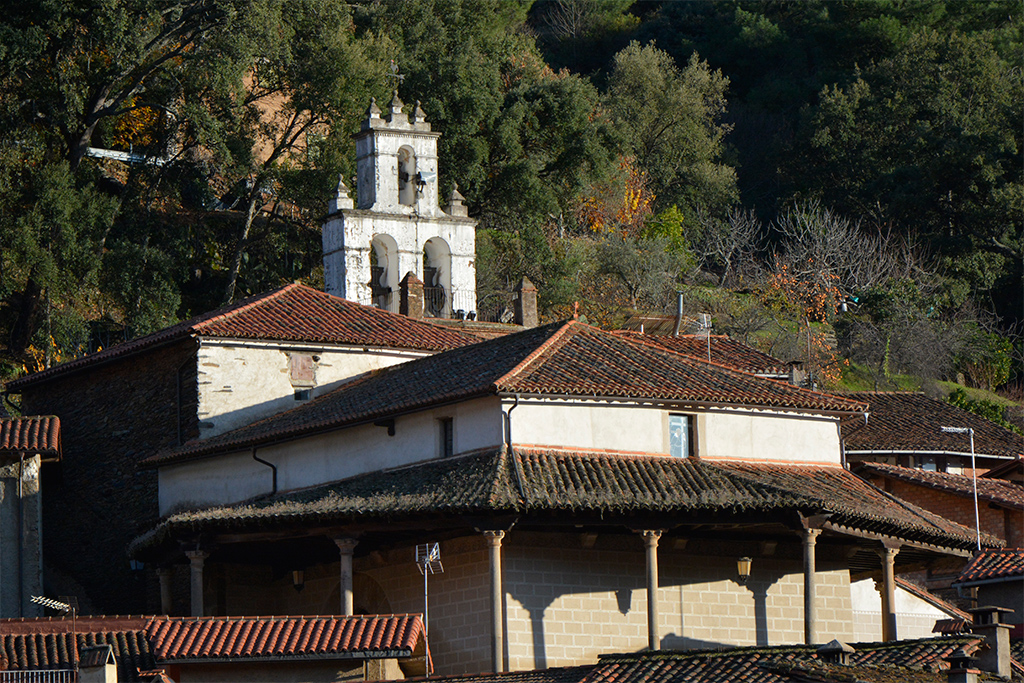
The nave is rectangular in shape and the decoration under the atrium roof stands out, with whitewashed walls imitating ashlars and the upper section sgrafittoed with vases of lilies, which are a symbol of the Virgin Mary.
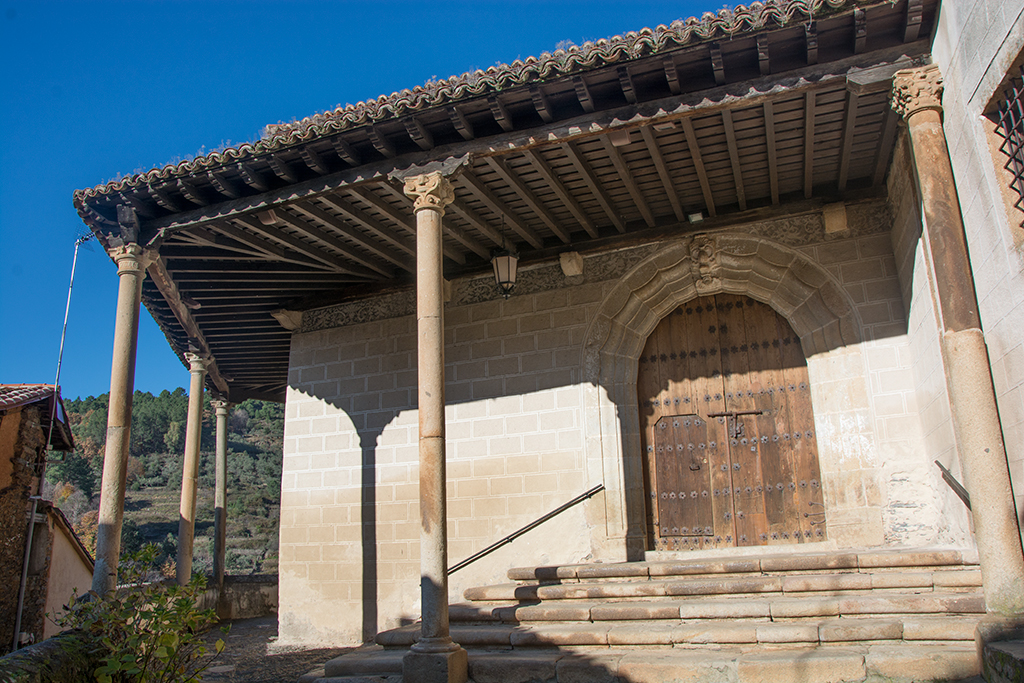
The two beautifully crafted doorways which retain their original metalwork are located on either side of the nave. On the south side we again see references to Mary in the use of a vase of lilies carved into the arch.
The defining feature of the bell tower is the whitewashed belfry. The main chapel stands out from the rest of the building due to its height and the sacristy is an extension attached to the main nave.
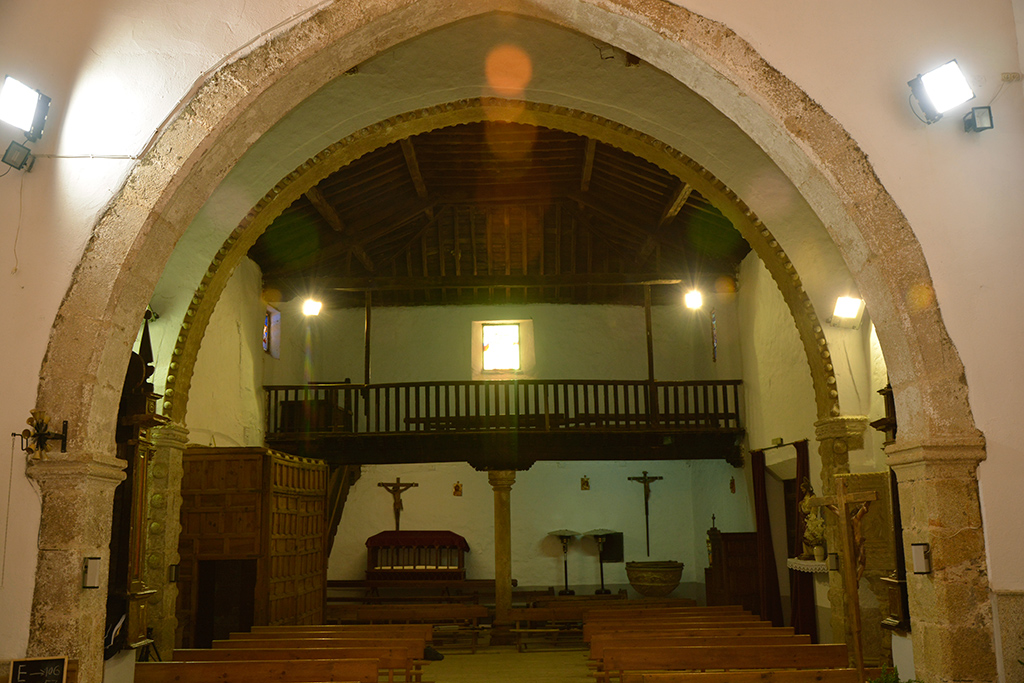
The interior of the church is divided by a pointed arch on beautifully decorated pilasters and has a wooden roof. At the back of the church the three sloped ceiling is supported by a tie beam which is held up by the choir loft whose wooden structure rests on a granite pillar with a gothic capital.
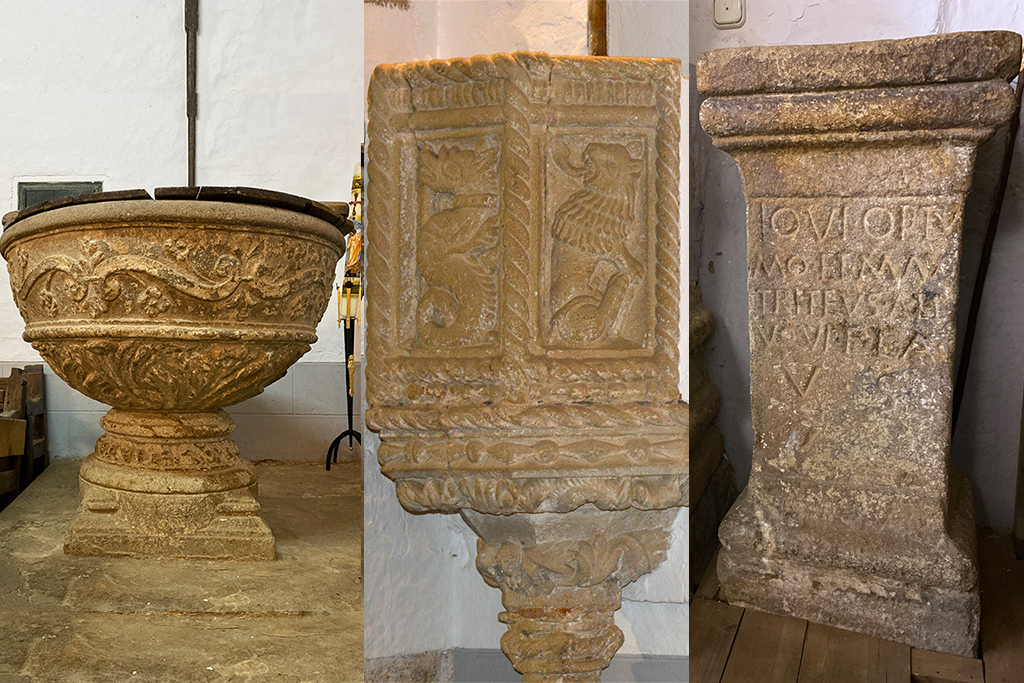
Some of the most interesting features are the Renaissance-style granite baptismal font with detailed carving dating from 1553; the 15th century sacred pulpit made of granite with beautiful Gothic-style decoration; and the votive located next to the south-side entrance.
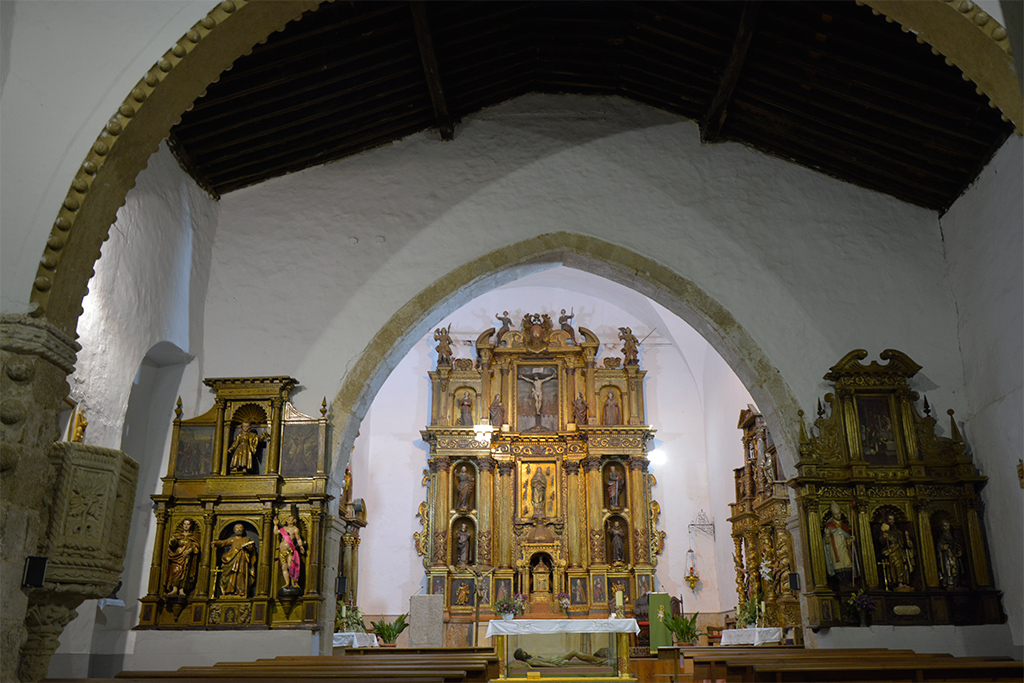
The floorplan of the main chapel is almost square and it is covered with a whitewashed brick groin vault and separated from the nave by a pointed triumphal arch.
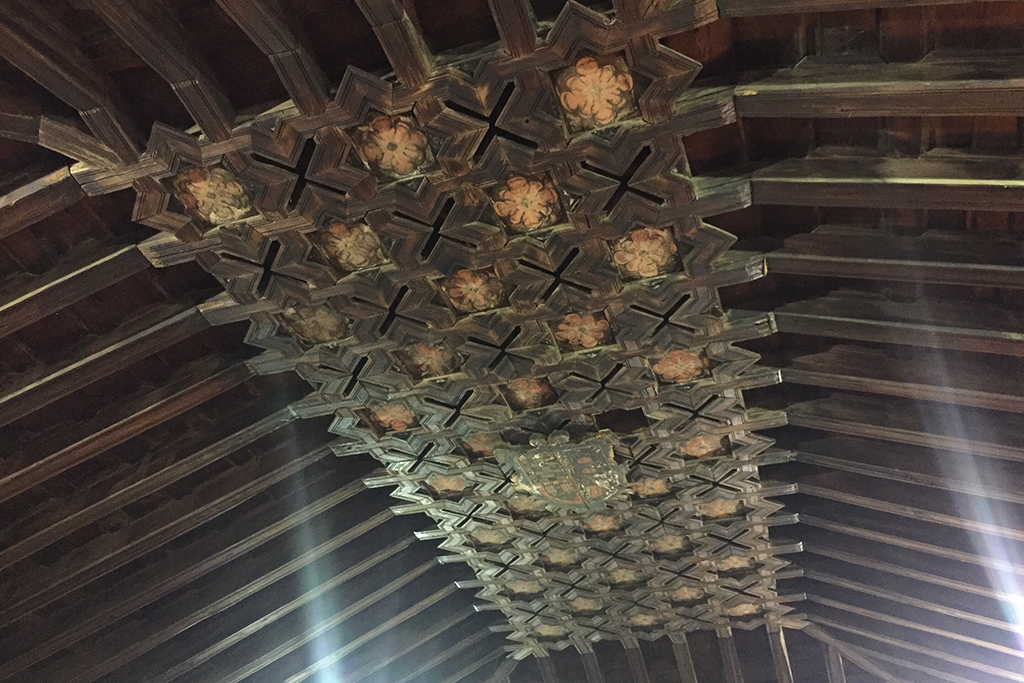
A lintelled doorway gives access to the sacristy which is generously proportioned and has a beautiful octagonal Mudejar coffered ceiling with a richly polychromed central part featuring the coat of arms of the House of Oropesa.
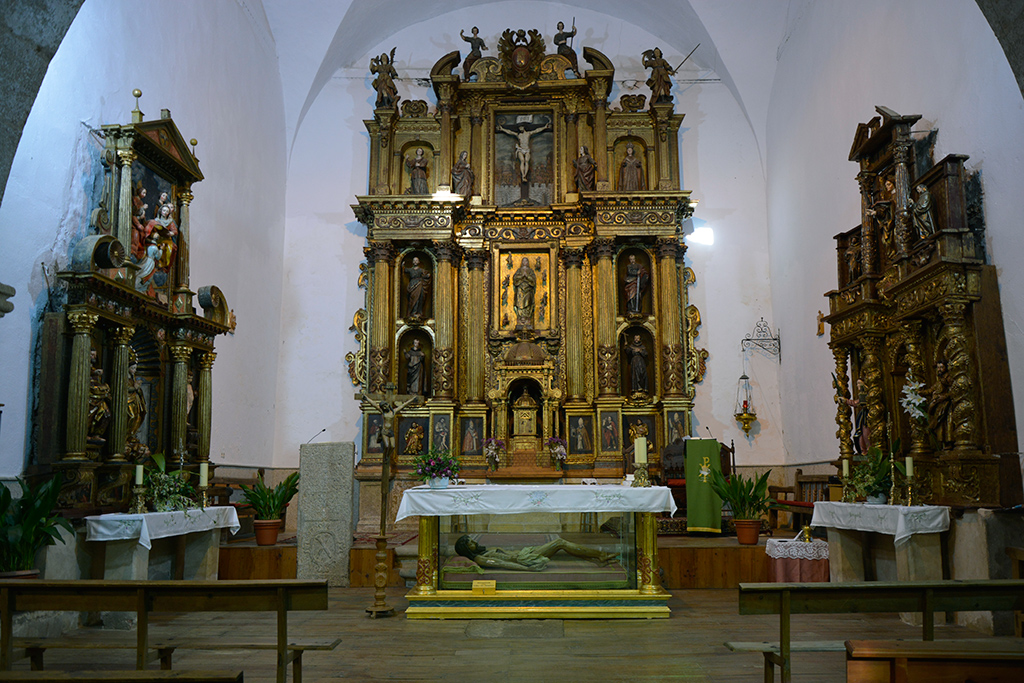
Robledillo's church houses interesting examples of religious imagery and six beautiful gilded and polychrome wooden altarpieces: the main wooden altarpiece, completed around 1600; the altarpieces of the Virgen del Rosario and of San Andrés from 1640; that of Santiago el Mayor from 1660; the altarpiece of the Epistle; and another one made up of various elements from different periods.
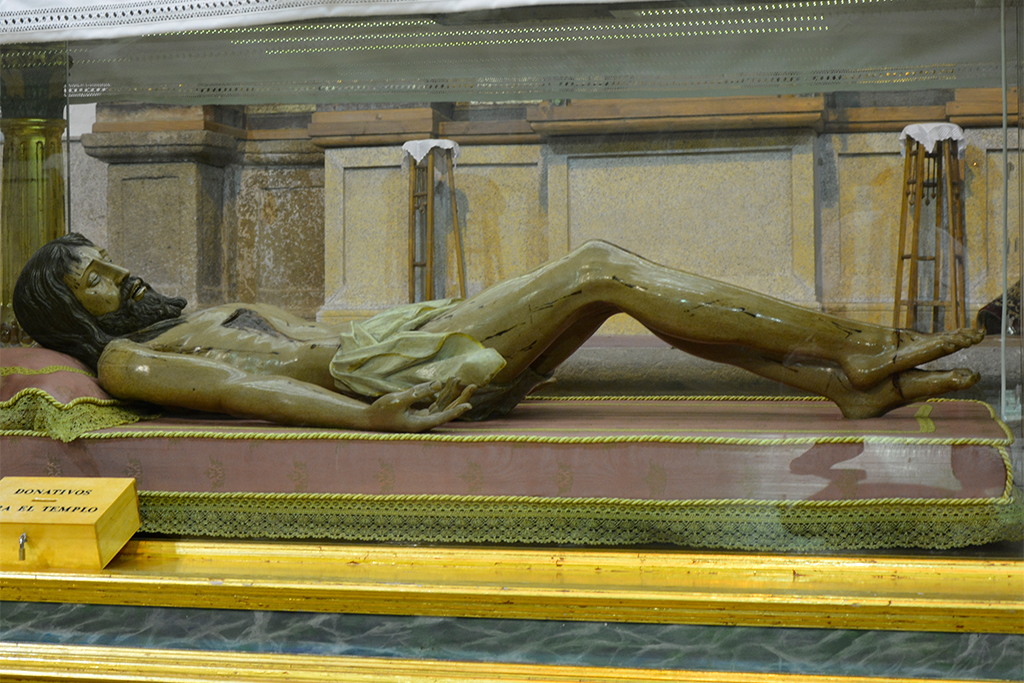
The most venerated image, which is also the most singular, is that of Cristo Yacente (the Recumbent Christ), an articulated wooden carving located under the altar which is formed by the niche. It is in a highly realistic Baroque style and dates from around 1640. Every year, it is carried in procession through the streets of Robledillo during Holy Week.